
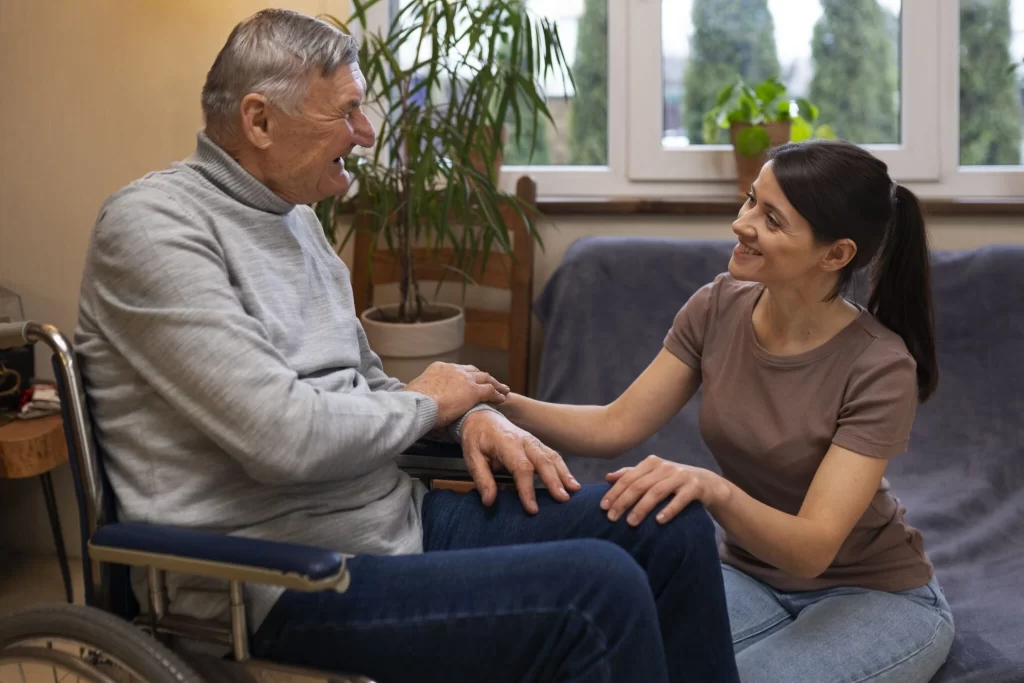
Supporting a loved one with mobility needs can feel like a balancing act: you want to help them stay independent, safe, and comfortable without taking away their autonomy or turning every interaction into “caregiving mode.
Whether the challenge is arthritis, declining balance, recovering from surgery, or simply the effects of aging, the right approach makes all the difference.
In this guide, we’ll talk about how to support loved ones with mobility needs in a thoughtful, respectful way. We’ll cover mindset, home adjustments, choosing aids, communication tips, and when to bring in professional services.
Table of Contents
1. Start With Empathy and Respect
First things first: approach mobility needs nsupport as a partnership, not a takeover. It’s so common for a well-meaning family member to step in and suddenly the senior feels less independent or more self-conscious.
One key stat: nearly 35% of seniors say fear of losing independence stops them from asking for help. That’s why an empathetic approach matters.
Start by asking:
- “Which movements feel comfortable today?”
- “Where do you feel unsteady or tired?”
- “How can I support you so you feel more secure, not less?”
By inviting input and listening, you preserve dignity. Then you can jointly identify where mobility needs aids or adjustments could help not because you decided, but because your loved one helped decide.
2. Assess the Environment: Make Home “Mobility‐Friendly”
Often the biggest hurdle isn’t the device, but the environment. Is the home set up for safe movement? Are there hazards, poor lighting, slippery surfaces, or furniture too high/low?
Useful steps include:
- Clearing walkways of rugs or cords
- Ensuring good lighting, especially in hallways and bathrooms
- Adding grab bars and non-slip mats in the bathroom
- Ensuring furniture height suits your loved one (so standing or sitting isn’t a struggle)
- Checking that mobility needs aids can be stored and moved easily
If you’d like professional help for this step, consider a Home Mobility needs Safety Consultation (or equivalent service) to identify risk areas in the home and recommend practical adjustments.
Making good environmental changes often means fewer “quick fixes” later. A recent study found that falls account for over 40% of injury-related hospitalizations among seniors, and many of these start at home due to hazards. So getting the environment right is a major part of support.
3. Choosing the Right Mobility Aid Together
Once you’ve got an environment that supports safe movement, the next step is selecting the right mobility needs aids. This isn’t about buying the “latest gadget,” but matching the aid to the person’s actual needs.
Think about:
- How far they walk or wish to walk
- Whether balance is an issue
- How much hand/grip strength they have
- Their stamina (do they tire quickly?)
- Whether indoor, outdoor or both use are needed
Many families find it helpful to get a Mobility Assessment Service to guide this selection process: evaluating walking style, pain points, grip strength, and recommending correctly sized devices.
Here are some common mobility needs options and when they might be appropriate:
- Canes or walking sticks – For mild mobility changes, good grip strength, occasional instability.
- Rollators or walkers – For more frequent support, long indoor walks, stopping to sit occasionally.
- Lightweight wheelchairs – When walking is tiring or painful, or there are long outings.
- Mobility scooters – For outdoor independence, bigger spaces, longer distances.
- Transfer aids (bed rails, shower chairs) – For safe transitions and bathrooms/bedrooms.
It’s vital the senior is involved in the selection that way the device feels like a tool of support, not a symbol of limitation.
4. Coaching & Encouragement: Helping Without Hovering
Supporting someone with mobility needs doesn’t mean doing everything for them. The goal is to enable, not just assist. Here are some approaches:
- Encourage regular use of the mobility device: It’s easy for someone to avoid it because they feel awkward, but fading into old habits defeats the benefit.
- Practice together: A short walk around the house or garden with the device can build comfort and confidence.
- Patience with time and progress: Mobility comes with small wins. Celebrating each one matters.
- Step back when appropriate: Let them try something first, you stay nearby as backup, rather than taking over immediately.
- Gentle reminders: “Would you like a rest after that walk?” or “Do you want to use your device for a bit?” bring awareness without pressure.
It’s crucial that the senior sees the change as their tool, not yours. That mindset shift — from caregiver to partner — changes how the device gets used daily.
5. Professional Guidance & Training
Sometimes devices are chosen, but they’re not used—or not used correctly—because no one took the time to train or adjust the fit. This is where professional support can really elevate results.
A “Wheelchair Support & Training Service” (or similar) can help families and seniors with proper use, fits, transfers, maintenance, and safety checks. Getting the right training means fewer frustrations, better mobility habits, and improved long-term outcomes.
Using services early can reduce the risk of misuse or abandonment of aids, which happens more often than you might think.
6. Communication About Mobility Needs Changes
Mobility needs can evolve over time perhaps gradually, perhaps rapidly (after surgery or illness). It’s important to keep channels of communication open:
- Ask recent questions: “Have you felt less steady lately?” “Is this device still comfortable?” “Is there someplace you avoid because it’s too hard?”
- Make note of subtle changes: slower pace, avoidance of stairs, shorter distances.
- Share observations gently: “I noticed you hesitated on the porch—want to look at a handrail together?”
- Invite collaboration: “Would you like me to help check some devices this weekend?”
- Respect the senior’s agency: They may decline help; that’s their right, but keep the conversation inviting, not forcing.
By making mobility support part of everyday talk rather than a big “event,” you reduce stigma and maintain connection.
7. Budgeting & Insurance Considerations
Mobility Needs aids and home adjustments cost money, and that can be a barrier. But some insights can help:
- Many insurance plans or government health programs cover parts of mobility aids when medically necessary.
- Some devices can be rented instead of purchased, at least until the right fit is found.
- Home safety modifications (grab bars, lighting) often cost less than expected but deliver big safety returns.
- Budgeting ahead matters: Ask for quotes, check service options that guide you, and factor in future reviews as mobility needs change.
Working with a service that knows these financial aspects brings clarity. They can help you understand what your loved one’s condition qualifies for, what upgrades make sense now vs later, and how to match equipment/lifestyle.
8. Monitoring & Revising the Mobility Plan
One critical part of supporting mobility that’s often overlooked is reviewing the plan. Mobility needs are not static. Over time, you may need to:
- Re-assess the device: Is it still being used? Is it still comfortable?
- Check for new challenges: Reduced vision, new medications, unsteady surfaces.
- Upgrade or change equipment: For example, moving from a rollator to a scooter if longer distances become necessary.
- Update home modifications: As the person’s range decreases, small changes like a bedside rail might become essential.
If the senior is already working with a service like “Personalized Mobility Planning,” that ongoing revision can be part of the plan: periodic reviews, updates, recalibration of supports.
9. Building Emotional Support & Encouragement
Mobility Needs changes often bring emotional stress: frustration, fear of falling, loss of independence, identity shifts. As a loved one supporting them, your role includes emotional support:
- Acknowledge the feelings: “I know this isn’t easy.”
- Celebrate successes: “Great job on that walk today!”
- Encourage socials: Help them get out with friends or family mobility aid can be an enabler, not isolation.
- Stay positive but realistic: Mobility aids don’t erase every challenge, but they open up possibilities.
- Maintain humour and lightness: Laughter and routine connection help ease the transitions.
10. Real-Life Scenario: Putting it All Together
Let’s say your mother, Mary, has early-stage hip osteoarthritis. She has mild pain when walking more than a block and has started avoiding her favourite garden path.
- You begin by asking Mary her concerns and preferences (step 1).
- Walk together through the home: you notice the patio step has no handrail and the path lighting is dim (step 2).
- You book a joint check-in to review mobility aids and agree she tries a rollator this weekend (step 3).
- You walk alongside her as she uses the rollator in the garden, giving encouragement but letting her lead (step 4).
- You arrange a professional Mobility Assessment via the service link to check her posture, gait, and device fit (step 5).
- You schedule weekly check-ins, ask casual questions about how she feels when walking, and you’re open to her feedback (step 6).
- You research budget-friendly rollators, check her insurance options, and ask the service provider about cost breakdowns (step 7).
- After six months you review: Mary has extended her walks slightly, but has begun to need more support in the evenings—so you plan to reassess and consider adding a better lighting system and perhaps changing to a rollator with seat (step 8).
- You make it fun: you schedule a picnic in the garden, invite friends, make a challenge to walk a little further celebrating each step (step 9).
By following this holistic sequence, you’ve supported Mary’s mobility in a respectful, proactive, and empowered way.
Conclusion
Supporting a loved one with mobility needs isn’t just about equipment it’s about collaboration, respect, and ongoing adaptation.
With the right mindset, home adjustments, device choice, communication, and professional support, you can help someone move with more confidence, safety, and dignity.
If you feel unsure where to start, consider booking a Mobility Assessment Service to take the first step together. And as you move forward, revisit the plan, celebrate the small wins, and keep the conversation open.
You’re not alone in this. With the right tools and support, your loved one can continue doing the things they love and you can support that journey with care, connection, and confidence.
FAQs
1. How do I know when my loved one needs a mobility aid?
Look for signs like avoiding walking, holding onto furniture, feeling unsteady, walking more slowly, or complaining about joint pain or fatigue. If they’ve had a recent fall or near-fall, that’s also a strong signal to consider a mobility assessment and possibly a device like a cane, rollator, or scooter.
2. How can I support their mobility without making them feel dependent?
Involve them in every decision, ask for their preferences, and treat mobility aids as tools for independence instead of “signs of weakness.” Offer help, but don’t force it. Walk beside them rather than in front, and encourage them to do what they safely can on their own.
3. What’s the best first step if I’m unsure which mobility aid is right?
Start with a simple assessment: observe their walking, balance, and pain levels, and talk to them about their daily routines. Then consult a professional mobility service or healthcare provider to match their needs with the right device, rather than guessing or buying based on appearance.
4. How can I make our home safer for someone with mobility challenges?
Clear clutter and loose rugs from walkways, improve lighting, add grab bars in the bathroom, use non-slip mats, and make sure frequently used items are within easy reach. Small changes like these can significantly reduce the risk of falls.
5. Do mobility needs change over time?
Yes. Mobility can improve, stay stable, or gradually decline depending on health, age, and conditions like arthritis. It’s important to review devices and home setups regularly and adjust them as your loved one’s needs, strength, and confidence change.